
For UK Healthcare Professionals Only
This website contains promotional content and is intended for UK Healthcare Professionals only.
For all other UK residents, please visit www.taihooncology.eu.
Futibatinib is an irreversibly‑binding tyrosine kinase inhibitor that targets genetically‑altered FGFR1,2
These findings are based on preclinical data and should be interpreted within the context of its limitations1,2
FGFR genetic alterations (notably FGFR2 driver fusions) are oncogenic drivers in CCA, making them a key therapeutic target3
Futibatinib monotherapy is indicated for the treatment of adult patients with locally advanced or metastatic cholangiocarcinoma with a fibroblast growth factor receptor 2 (FGFR2) fusion or rearrangement that have progressed after at least one prior line of systemic therapy.1
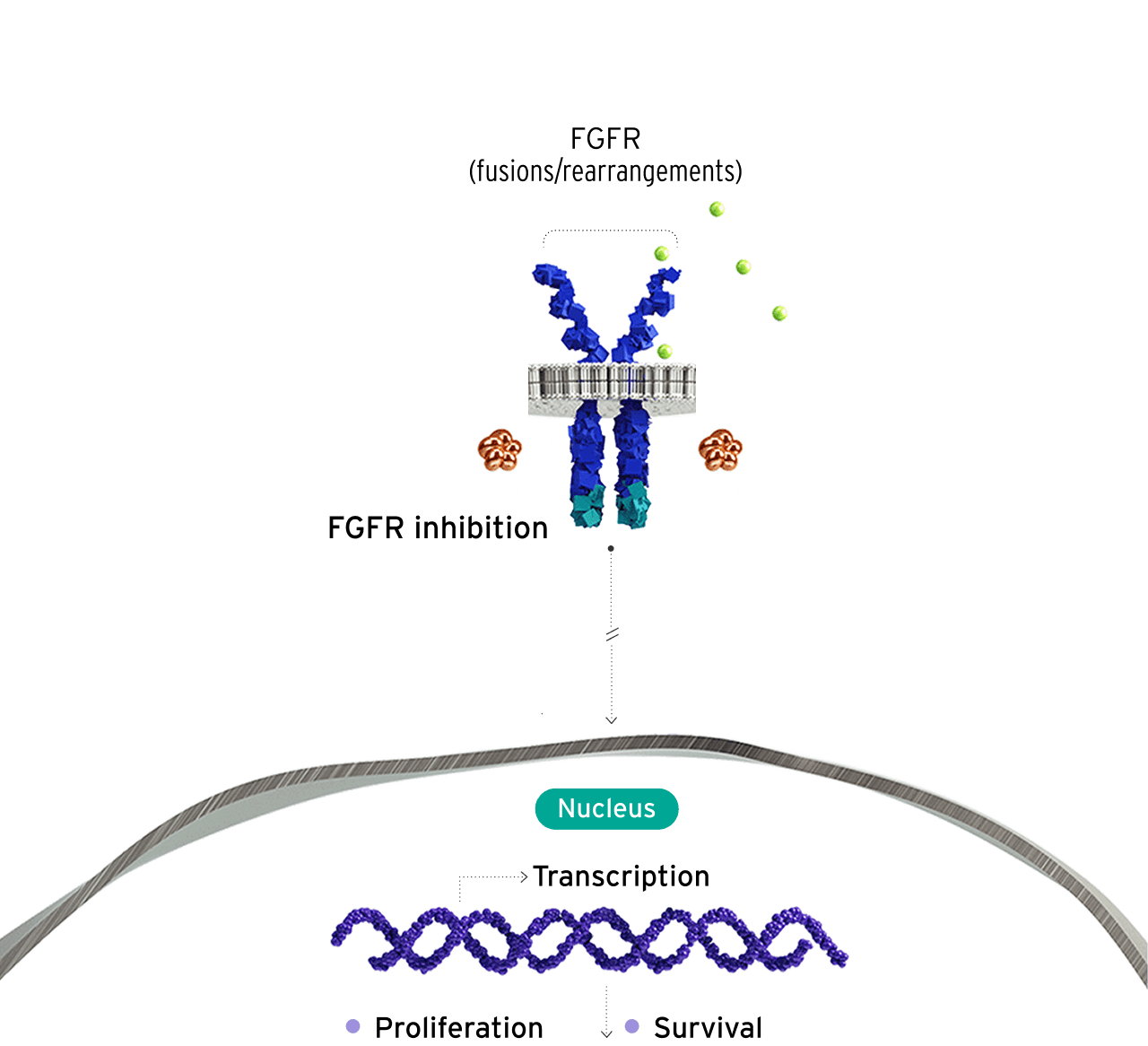
Adapted from Sootome H, et al. 2020.2
How does LYTGOBI work?
Futibatinib irreversibly inhibits FGFR 1, 2, 3, and 4 by covalent binding at a distinct binding site, unlike reversible ATP-competitive inhibitors, making it less susceptible to on-target resistance mutations1,2
- Futibatinib exhibits targeted antitumour activity against FGF-pathway deregulated tumours in cancer cell lines2
- Futibatinib has shown activity across a broad range of FGFR alterations regardless of the FGFR subtype or type of alteration in cancer cell lines2
Futibatinib exhibited in vitro inhibitory activity against FGFR2 resistance mutations (N550H, V565I, E566G, K660M)1
Futibatinib exhibits antiproliferative activity against cancer cell lines and xenograft models2
efficacy and safety data Learn about
LYTGOBI dosing Discover our range of
downloadable resources
Please see full Prescribing Information for LYTGOBI (futibatinib) here.
ATP, adenosine triphosphate; CCA, cholangiocarcinoma; FGF, fibroblast growth factor; FGFR, fibroblast growth factor receptor; FGFR2, fibroblast growth factor receptor 2; MoA, mechanism of action.
References: 1. LYTGOBI Summary of Product Characteristics; 2. Sootome H, et al. Cancer Res. 2020;80(22):4986–4997; 3. Liu SV, et al. Signal Transduct Target Ther. 2025;10(1):111.